You stand at the checkout counter. The cashier asks, “Credit or debit?” You have heard this question thousands of times. You have answered without thinking. But have you ever stopped to understand what is actually happening behind that small plastic card?
The difference between credit and debit is not just which button you press. It is a fundamental difference in how money moves, who is liable for fraud, how your credit score is affected, and what protections you have. Using the wrong card at the wrong time can cost you hundreds of dollars in interest or leave you vulnerable to fraud. Using the right card correctly can build your credit, earn you rewards, and protect your money.
In this comprehensive guide, you will learn exactly how credit cards and debit cards work, from the moment you swipe to the moment the transaction is settled. You will learn the key differences between the two, the advantages and disadvantages of each, the fees and costs to watch for, and how to choose which card to use in every situation. By the end, you will never answer “credit or debit” without understanding exactly what you are choosing.
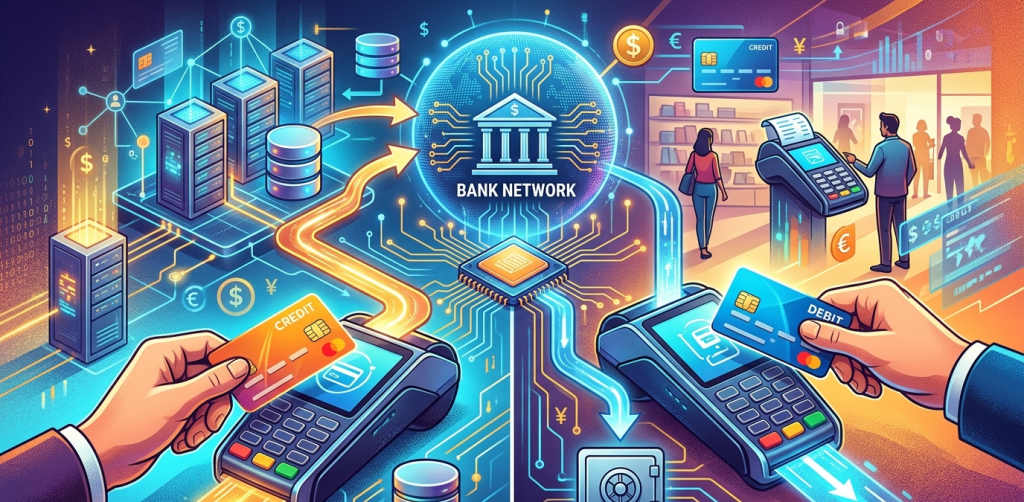
The Basic Difference: Whose Money Are You Spending?
The most fundamental difference between credit and debit cards is whose money you are spending when you make a purchase.
When you use a debit card, you are spending your own money. The card is linked directly to your checking account. When you swipe, the money is withdrawn from your account almost immediately. If you have one hundred dollars in your account, you cannot spend one hundred fifty dollars. The transaction will be declined, or you will be charged an overdraft fee.
When you use a credit card, you are spending the bank’s money. The bank pays the merchant on your behalf. You then owe that money to the bank. You receive a statement at the end of each billing cycle showing everything you have charged. You have a grace period, typically twenty-one to twenty-five days, to pay the balance in full. If you pay in full, you pay no interest. If you pay only part of the balance, the bank charges interest on the remaining amount.
This difference has profound implications. With a debit card, you cannot spend money you do not have. With a credit card, you can, but you will pay dearly for the privilege. The average credit card interest rate in 2026 is approximately twenty-two percent. Carrying a balance of one thousand dollars for a year costs you two hundred twenty dollars in interest.
The table below summarizes the key differences between credit and debit cards at a glance.
| Feature | Credit Card | Debit Card |
|---|---|---|
| Whose money | Bank’s money (you borrow) | Your money (from checking account) |
| Spending limit | Credit limit set by bank | Available balance in checking account |
| Interest charges | Yes if balance not paid in full | No |
| Builds credit history | Yes | No |
| Fraud liability (zero liability policy) | $0 (by federal law) | $0 (by policy, but money temporarily missing) |
| Impact during fraud investigation | Your credit line is frozen | Your actual money is missing |
| Rewards (cash back, points, miles) | Common | Rare |
| Annual fee | Sometimes | No |
| ATM access | Yes, but with fees and interest | Yes, often free at in-network ATMs |
| Grace period | 21-25 days to pay without interest | Not applicable (money leaves immediately) |
How Debit Cards Work: The Journey of a Transaction
When you swipe, insert, or tap your debit card, a complex chain of events begins. Understanding this chain helps you appreciate the security features and potential vulnerabilities.
The transaction begins at the merchant’s point-of-sale system. The system reads your card information, including the card number, expiration date, and security code. It sends this information, along with the transaction amount, to the merchant’s bank, called the acquiring bank.
The acquiring bank sends the transaction to the card network. The major card networks are Visa, Mastercard, American Express, and Discover. The card network routes the transaction to your bank, called the issuing bank.
Your bank receives the transaction. It checks whether you have sufficient funds in your checking account. If you do, it places a hold on those funds. The money is not yet transferred, but it is reserved so you cannot spend it elsewhere. If you do not have sufficient funds, the transaction may be declined, or the bank may approve it and charge you an overdraft fee.
Your bank sends an approval code back through the card network to the acquiring bank to the merchant’s terminal. The terminal displays “Approved.” The entire process takes two to three seconds.
The actual transfer of money happens later, usually at the end of the business day. The merchant’s bank batches all transactions and sends them to the card network. The card network settles the transactions, moving money from your bank to the merchant’s bank. The money leaves your account. The hold is converted to an actual debit.
For a signature debit transaction, you sign the receipt. For a PIN debit transaction, you enter your personal identification number. PIN transactions are routed through different networks, typically Star, Pulse, or NYCE. They may have lower fees for merchants. They may also have lower fraud protection limits.
When you choose “credit” at a terminal while using a debit card, you are not actually using credit. You are still using your own money. The difference is the network routing. “Credit” routes through Visa or Mastercard networks. “Debit” routes through PIN networks. Your money leaves your account either way. The only difference is which network processes the transaction.
How Credit Cards Work: The Borrowing Cycle
Credit cards operate on a monthly billing cycle. Understanding this cycle is the key to using credit cards without paying interest.
When you open a credit card, the bank assigns you a credit limit. This is the maximum amount you can borrow. Your limit depends on your credit score, your income, and your existing debt. A new borrower might have a limit of five hundred dollars. A borrower with excellent credit might have a limit of fifty thousand dollars or more.
You use the card to make purchases. Each purchase is added to your balance. You receive a statement at the end of each billing cycle. The statement shows your statement balance, which is the total of all purchases during that cycle. It also shows your minimum payment, typically one to three percent of the balance or twenty-five dollars, whichever is larger.
The statement also shows your due date, typically twenty-one to twenty-five days after the statement closing date. This is the grace period. If you pay the full statement balance by the due date, you pay no interest on your purchases. The bank has lent you money for free for up to fifty-five days, depending on when in the cycle you made the purchase.
If you do not pay the full statement balance by the due date, the bank charges interest on the unpaid amount. The interest is calculated using the annual percentage rate, or APR. The APR is divided by three hundred sixty-five to get a daily periodic rate. Interest accrues daily on the unpaid balance.
If you pay only the minimum payment, the remaining balance rolls over to the next cycle. You will be charged interest on that balance. You will also lose your grace period. New purchases will begin accruing interest immediately, with no grace period.
This is how credit card debt spirals. You charge one thousand dollars. You pay the minimum, say twenty-five dollars. The bank charges interest, say two hundred twenty dollars per year. You pay more in interest than you pay toward the principal. The balance never goes down. You become trapped.
The cardinal rule of credit card use is to always pay the full statement balance by the due date. If you cannot do this, you should not be using a credit card for spending. You should use a debit card until you have your spending under control.
The Path of Money: Credit vs. Debit Side by Side
To truly understand the difference, it helps to follow a specific transaction through both systems. Imagine you buy a fifty dollar dinner at a restaurant.
If you use a debit card, the fifty dollars is held immediately. At the end of the day, the fifty dollars leaves your checking account. The money is gone. Your checking account balance is fifty dollars lower. There is no bill to pay later. No interest. No credit impact.
If you use a credit card, the restaurant charges fifty dollars to your card. Your available credit decreases by fifty dollars. No money leaves your bank account. At the end of the billing cycle, you receive a statement showing the fifty dollars. You have twenty-one to twenty-five days to pay. If you pay the full statement balance, you pay zero interest. If you pay only the minimum, you will be charged interest on the remaining balance.
The credit card transaction also builds your credit history. Each on-time payment is reported to the credit bureaus. Over time, this builds a positive credit score. A higher credit score qualifies you for better interest rates on mortgages, auto loans, and other credit products.
The debit card transaction does nothing for your credit. Debit cards are not reported to credit bureaus. Using a debit card responsibly will not help you build credit. Using a debit card irresponsibly—overdrawing your account—can hurt you through ChexSystems, which banks use to screen new account applicants.
Fees and Costs: What You Actually Pay
Both credit and debit cards come with potential fees. Understanding these fees helps you avoid them.
Credit card fees begin with the annual fee. Some credit cards charge an annual fee, typically fifty to five hundred dollars, for the privilege of having the card. Premium rewards cards often have annual fees. No-fee credit cards are widely available. Unless the rewards and benefits exceed the annual fee, choose a no-fee card.
Interest is the largest potential cost. The average credit card APR in 2026 is approximately twenty-two percent. For cards for people with poor credit, the APR can exceed thirty percent. If you carry a balance, interest accrues daily. A one thousand dollar balance at twenty-two percent interest costs you eighteen dollars in interest in the first month alone.
Late payment fees apply if you pay after the due date. Late fees are typically twenty-five to forty dollars. If you are late multiple times, the fee may increase. Your APR may also increase as a penalty.
Cash advance fees apply when you use your credit card to withdraw cash from an ATM. Cash advances typically have a fee of three to five percent of the amount, with a minimum of ten dollars. Interest on cash advances begins accruing immediately. There is no grace period. Never use a credit card for a cash advance unless it is a genuine emergency.
Foreign transaction fees apply when you use your card in a foreign currency. The fee is typically one to three percent of the transaction amount. Many travel cards have no foreign transaction fee. If you travel internationally, choose a card without this fee.
Debit card fees are different. Overdraft fees are the largest risk. If you spend more than you have in your checking account, the bank may cover the transaction and charge you an overdraft fee, typically thirty to thirty-five dollars. Some banks charge multiple overdraft fees per day. You can avoid overdraft fees by opting out of overdraft coverage. With opt-out, the transaction is simply declined.
ATM fees apply when you use an ATM outside your bank’s network. You may be charged two fees: one from your bank and one from the ATM owner. Total fees can be four to six dollars per withdrawal. Use in-network ATMs or choose a bank that reimburses out-of-network ATM fees.
Inactivity fees apply to debit cards that are not used for an extended period, typically six to twelve months. The bank may charge a monthly fee or close the account. Make a small transaction every month to keep the account active.
Fraud Protection: Who Pays When Something Goes Wrong
Fraud protection is one area where credit cards have a clear advantage over debit cards. The legal protections are different. The practical experience is very different.
For credit cards, federal law limits your liability for unauthorized charges to fifty dollars. Most credit card issuers have zero liability policies, meaning you pay nothing. When you report fraud, the bank removes the fraudulent charges from your statement. Your credit limit is restored. You are not out any money during the investigation.
For debit cards, federal law also limits your liability, but the rules are different. If you report the loss or theft before any unauthorized transactions occur, you have zero liability. If you report within two business days after discovering the loss, your liability is limited to fifty dollars. If you report within sixty days, your liability is limited to five hundred dollars. If you wait more than sixty days, you could be liable for the entire amount.
The practical difference is what happens to your money during the investigation. When a fraudulent transaction occurs on a credit card, your actual money is not affected. You still have access to your bank account. You can still pay your bills. When a fraudulent transaction occurs on a debit card, your actual money is taken from your checking account. You may not have access to that money for weeks while the bank investigates. Your rent check could bounce. Your other bills could be unpaid.
For this reason, many financial experts recommend using credit cards for most purchases, especially online purchases, and using debit cards only for ATM withdrawals and for spending at trusted local merchants. If your debit card information is stolen, your actual money is at risk. If your credit card information is stolen, the bank’s money is at risk while you sort it out.
Rewards: Cash Back, Points, and Miles
Credit cards often offer rewards. Debit cards rarely do. This is a significant difference that can add up over time.
The most common reward is cash back. A typical cash back card offers one to two percent back on all purchases. Some cards offer higher percentages on specific categories like groceries, gas, or dining. A card might offer three percent back on dining, two percent back on groceries, and one percent back on everything else.
Points are another common reward. Points can be redeemed for travel, gift cards, or statement credits. The value of points varies by program. Some programs offer one cent per point. Others offer more or less depending on how you redeem.
Miles are specific to travel rewards cards. Miles can be redeemed for flights, hotels, and other travel expenses. Some cards offer bonus miles for signing up, often fifty thousand to one hundred thousand miles after spending a certain amount in the first few months.
Rewards are only valuable if you pay your balance in full every month. If you carry a balance and pay interest, the interest will almost certainly exceed the value of the rewards. A twenty-two percent interest rate on a one thousand dollar balance costs you two hundred twenty dollars per year. One percent cash back on the same spending earns you ten dollars. You are losing two hundred ten dollars. Rewards cards are for people who never carry a balance.
Some debit cards offer rewards, but they are rare. Discover Cashback Debit offers one percent cash back on up to three thousand dollars in monthly purchases. A few other banks offer similar programs. But the vast majority of debit cards offer no rewards at all.
Building Credit: The Debit Card Disadvantage
Your credit score is one of the most important numbers in your financial life. It determines whether you can get a mortgage, what interest rate you pay on a car loan, whether you can rent an apartment, and even whether you get certain jobs.
Credit cards are one of the most effective tools for building credit. Each month, your credit card issuer reports your payment activity to the three major credit bureaus: Equifax, Experian, and TransUnion. On-time payments build your credit score. Low credit utilization—using a small percentage of your available credit—also helps your score.
Debit cards do not build credit. Debit card activity is not reported to credit bureaus. Using a debit card responsibly for years will not help you qualify for a mortgage. You will have no credit history. Lenders will not know whether you are a responsible borrower.
For people with no credit history, a secured credit card can be a good starting point. You deposit money with the bank, typically two hundred to five hundred dollars. That deposit becomes your credit limit. You use the card like a normal credit card. You pay the balance in full each month. After six to twelve months of responsible use, you may qualify for an unsecured card.
If you cannot qualify for any credit card, some banks offer credit-builder loans. You make small monthly payments into a savings account. At the end of the term, you receive the money back, minus a small fee. Your on-time payments are reported to the credit bureaus, building your credit history.
Which Card to Use When
The decision of whether to use credit or debit depends on the situation.
Use a credit card for online purchases. If your card information is stolen, the bank’s money is at risk, not yours. You will not be left without access to funds while the fraud is investigated. Use a credit card for recurring bills. Automatic payments are easier to manage. You can dispute a charge if a company continues billing you after you cancel.
Use a credit card for travel. Many credit cards offer travel insurance, rental car insurance, and trip cancellation protection. Some offer no foreign transaction fees. Use a credit card for large purchases. If a product is defective or never arrives, you can dispute the charge. Credit card dispute rights are stronger than debit card dispute rights.
Use a debit card for ATM withdrawals. You should never withdraw cash from a credit card. Cash advances have high fees and immediate interest. Use a debit card for small, everyday purchases at trusted local merchants. The risk of fraud is lower. Use a debit card when you are trying to control your spending. Because the money leaves your account immediately, you cannot spend money you do not have.
Never use a debit card for a hotel or rental car deposit. The hotel or rental company may place a large hold on your account, tying up your actual money for days or weeks. You may not have access to that money when you need it. Use a credit card for deposits. The hold affects your available credit, not your actual cash.
Never use a debit card for online purchases from unfamiliar websites. If the website is fraudulent, your actual money will be stolen. You may not get it back. Use a credit card. The bank’s money is at risk, not yours.
The Bottom Line
Credit and debit cards look the same. They feel the same at checkout. But they are fundamentally different financial instruments. Debit cards spend your money. Credit cards spend the bank’s money, which you then owe. Debit cards do not build credit. Credit cards build credit with responsible use. Debit cards leave your actual money at risk during fraud. Credit cards leave the bank’s money at risk.
The best strategy for most people is to use both. Use a credit card for most purchases, especially online and travel. Pay the full statement balance every month. Never pay interest. Use a debit card for ATM withdrawals and for spending at trusted local merchants when you want to enforce a spending limit.
If you cannot trust yourself to pay the full balance every month, do not use a credit card. The interest will destroy any rewards or benefits. Use a debit card until you have your spending under control. Then reintroduce a credit card for its fraud protection and credit-building benefits.
The question at the checkout is not just “credit or debit.” It is a choice about whose money you spend, who is liable for fraud, and whether you build credit or remain invisible to lenders. Choose wisely.
Your Next Step: Open your credit card statement. Look at the previous month’s balance. Did you pay it in full? If not, make a plan to pay it off. Stop using the card until the balance is zero. Then use it only for purchases you can pay in full by the due date. If you do not have a credit card and have no credit history, apply for a secured credit card from a reputable issuer like Discover or Capital One. Use it for small purchases. Pay it in full every month. Watch your credit score grow.
Disclaimer: This content is for educational purposes only and does not constitute financial advice. Credit card terms, interest rates, and fees vary by issuer and change over time. Always read your cardholder agreement. Consult a financial advisor for advice specific to your situation.